
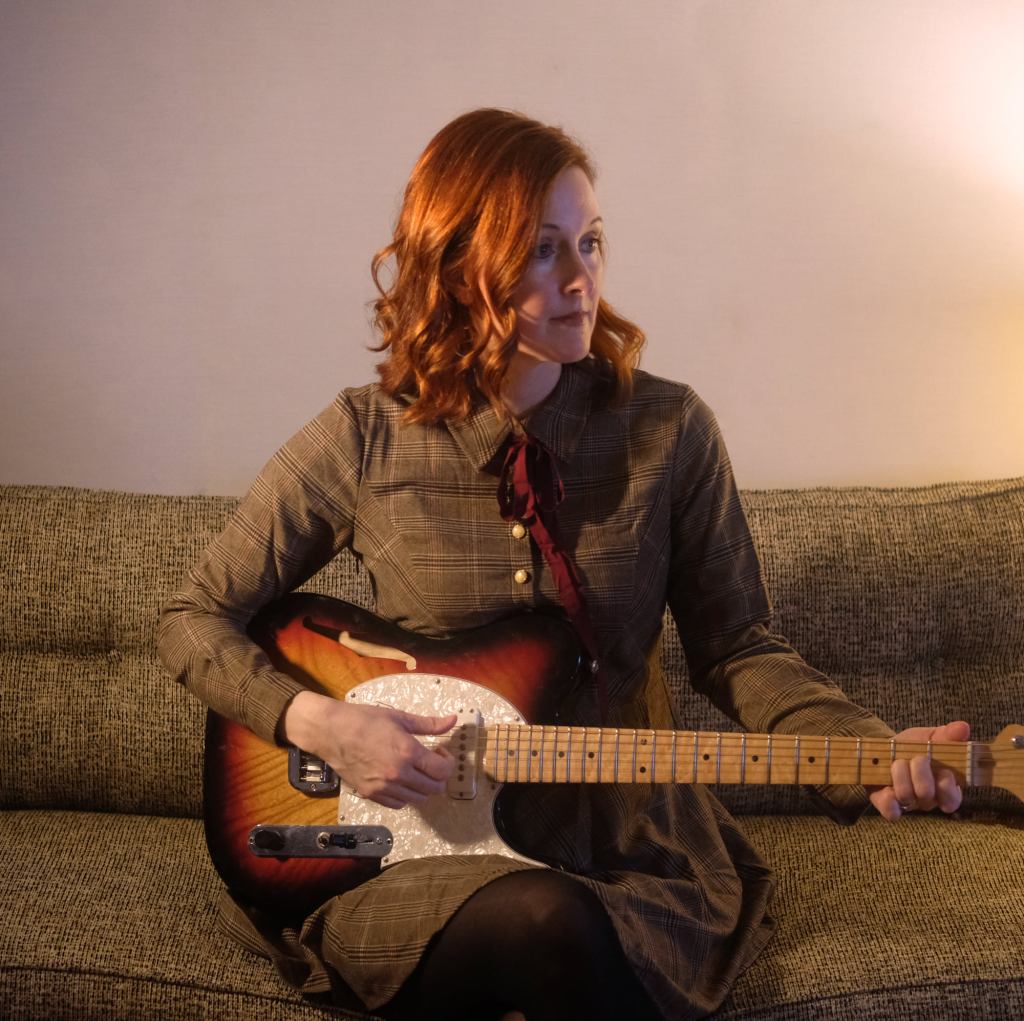
Hollie Kenniff is a multi-instrumentalist/composer who composes music for advertising, film and television. In addition to her project, which is released under her own name, she is also one half of the music group Mint Julep, which she co-founded with her husband Keith Kenniff. As we are both musically involved in some upcoming projects, I took the opportunity to find out about some of the processes behind her work.
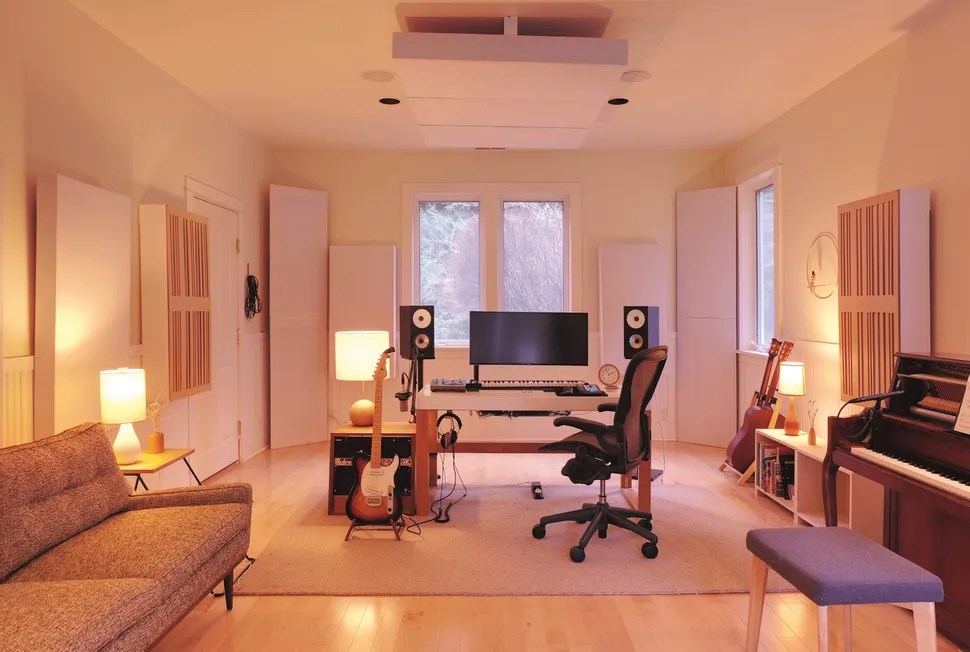
JS: Your work surface in the studio is focussed on a few essential components/devices. What are the main advantages of this, and do you think that the approach of limiting yourself to a small amount of equipment is more helpful in developing your own stylistic signature?
HK: I think there’s no right or wrong way, and it really varies for me. I like to fiddle with things and have physical knobs and such, but also sometimes the learning curve of certain tools can be more of a distraction from actually creating. I like the efficiency of doing more with less.
JS: Classical instruments such as guitar and piano play a significant role in your music. Can you tell us a little about the techniques you use to make the instruments audible in different ways?
HK: I use a lot of plugins to shape sounds that come from simple sources (piano, guitar, voice). I think it’s helpful not to always have one consistent way of treating a sound, so every time I start out I kind of start from scratch. Even if a sound is shaped into something unrecognizable, having an organic/imperfect source instead of something electronic and quantized, will give it an amount of variability.
JS: What are the main differences in your musical work between your “Hollie Kenniff” project and work for commercials, film and television? In terms of communication, how do you ensure that you establish a common language between you and the client that makes it as clear as possible how a satisfactory result can be achieved?
HK: Fortunately a lot of the work or licenses that have come about for the film work have been in direct relation to the music I’ve put out, so a lot of it has been in line with the stylistic impulses I already have; rather than being asked to something completely different, the clients I often have worked with already are on board with doing something that sounds like Hollie Kenniff, or Mint Julep.
JS: Have you ever thought about what kind of emotions are at the root of what your music describes? In other words, is there an emotional state that predominates in your music, practically as a condition for the music to emerge?
HK: I think it’s just about re enforcing a feeling of balance and introspection. I want the music to wrap someone up and make them feel like it’s an insulator. I want the music to feel personal, like a reflection of an ideal self or mood.
JS: Would you see the origin of your music as coming more from within yourself, or do things like nature, landscape or cities influence your creative vein?
HK: I think it all feeds in, but I am someone who soaks up things like a sponge, so the more variety of experiences I can engage with, the stronger they will inform what I want to say creatively. I love traveling, adventure, good conversation etc…so I think that although my music seems introverted, I have a need for connection to the world and to other people which gives me fuel.
I am often surrounded by music inside my home – whether I’m creating it or listening to Keith or my sons play or it’s on the speakers. But it also feels essential for me to be in silence every day and I find great inspiration from being in nature and surrounded by the sounds of nature. I’m a dreamer and music is a refuge.
JS: Can you imagine that man-made music will one day become superfluous because it could be generated completely independently by AI?
HK: I was reading about companies that are creating increasingly sophisticated programs, trained with a massive number of examples of an established genre, that can generate new outputs that seem to capture the essence of what they were trained with. One humorous example is a project called Relentless Doppelgänger, a nonstop 24/7 livestream of AI-generated death metal that creates songs that you could easily think were made by any number of black metal bands from Scandinavia.
Should artists be afraid of machines taking over and rendering them irrelevant? Given that AI is inspired by neocortical networks in the brain that are optimized to learn the general structure of human experience, it’s unsurprising that an AI program, with no grasp or experience of the artistic process, can replicate art that conforms to an established genre. Artists draw on a diverse range of eclectic influences and backgrounds whereas AI programs search for common ties within a defined genre and simply reimagine in a bland manner, rather than create great art that is unique and innovative.
So I don’t think that things will change in the ground shattering way some people fear it might. I do think there are certain options for AI that will help streamline things that are laborious. I think we’re kind of in this exciting, or fearful, discovery phase.
 Joachim Spieth