
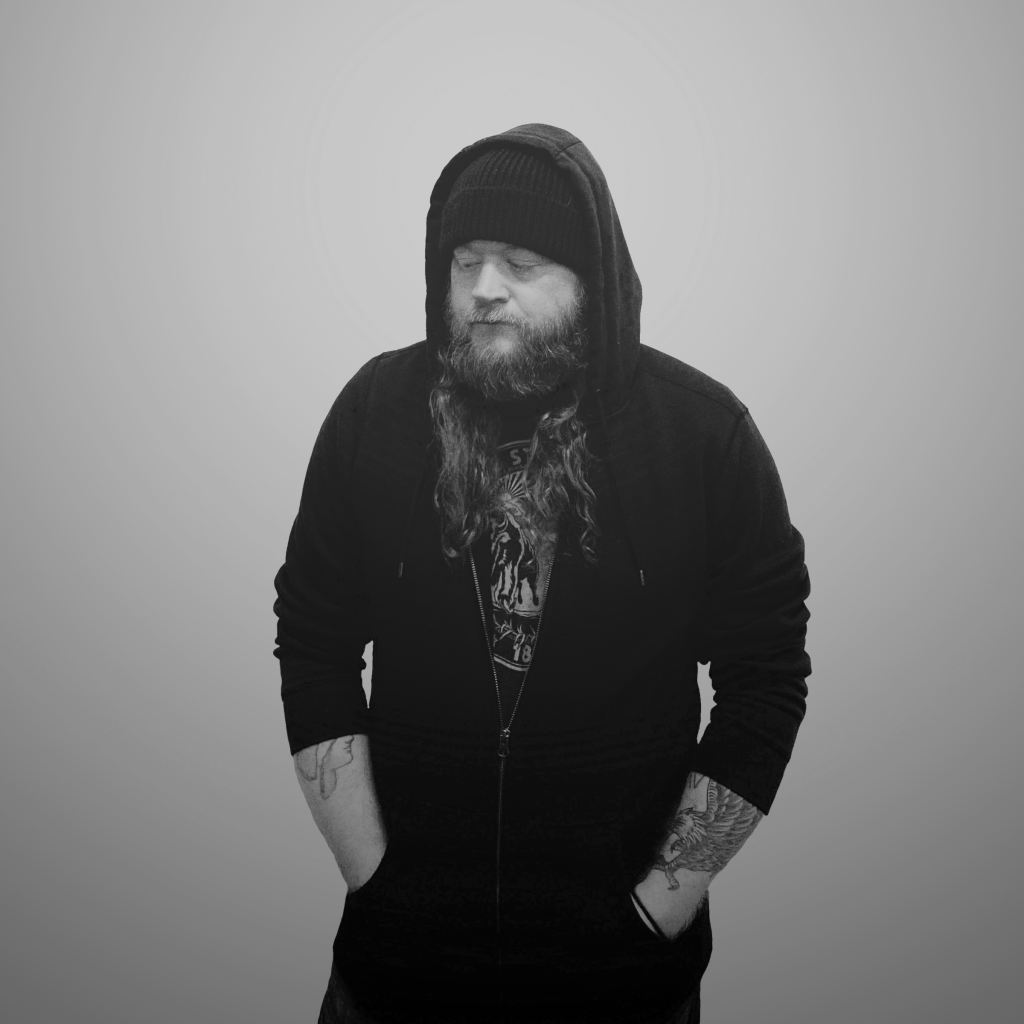
Over the past few years, the US-American artist zakè and his friends have created a social ecosystem around the field of ambient music that is unrivalled. A network of labels, artists, collaborations and the resulting creative output. In the course of his upcoming album “Dolere”, I talked to him about a few things.
JS: Can you tell us something about the intention and the creation process of the upcoming album “Dolere”?
z: Dolere is the result of late night and early morning sessions where I either couldn’t put my mind at ease or was awakened by the stresses of life d uring that particular period of time. Speaking of which; time, both constant and unpredictable, is a peculiar force. It marches on unceasingly, yet in moments of sorrow or pain, it seems to stretch and slow, as if suspended in the weight of emotions we cannot change. Each second becomes palpable, marked audibly by the ticking of a clock. These are contemplations and experiences that have threaded through my life, leaving me with unanswered questions. This was especially true during the period of time Dolere was written. This year, time seemed to grind to a halt, as if Spring itself froze in its tracks. Amidst sorrow and anguish, I longed for reprieve, to escape the relentless march of time. These tracks serve as a refuge for those burdened by distraction or sorrow, offering a brief respite from the inexorable passage of time. The tracks titles represent such emotions; ‘Dolera’ originates from the Latin word ‘dolor,’ meaning sorrow or anguish. ‘Dolere’ stems from its present-tense, infinitive form in Latin, translating to afflicted; to feel or suffer pain.
JS: Many of your pieces are very long in time, slowly fade in and run superficially in loops. If you listen deeper into the material, you sometimes ask yourself what exactly has changed, whether this or that element has changed gradually, or whether you’ve been fooled. if you switch off active, superficial thinking, you let yourself drift with the sound…
z: Repetition can be hypnotic, especially if you welcome it. It gives the listener a chance to really start hearing the different sounds and layers, almost like it unfolds in a much deeper and sometimes different way, depending on passive or active listening. With nearly all of my longer pieces, there are multiple occurrences of sound converging altogether in tandem. Some layers and sounds are more hidden, some more apparent, but ultimately the listener (hopefully) begins to hear more of these subtle sounds through multiple listens. Conversely, I write music as a backdrop to a listener’s life journey. Whether in studies, meditation, self-reflection, or calming sounds to slow down the distractions in daily life, my goal has always been that my output is a positive happening where one can find some calm in a busy world.
JS: At what point in the creation process do you realize that it’s enough, that the change is sufficient, and when a track can come to an end?
z: Honestly, there is no rhyme or reason to the lengths of my arrangements. Some tracks that I’ve made that are five minutes in duration are four minutes too long. Some float for much longer and I forget how long they are or feel as if they end too early even if they clock in at over thirty minutes. Again, time truly is a peculiar force.
JS: Ambient music is undoubtedly able to affect the listener emotionally in many different ways. The same piece evokes melancholy in one person, while another sees a hopeful glimmer of the future here, a touching interpersonal experience… How do you explain this component in this type of music that can be interpreted in so many different ways? Is ambient music perhaps so popular with listeners precisely because it can be used in so many different ways?
z: The thing I love about the genre is exactly as you described. Its meaning and sound can be interpreted in a multitude of ways that can be radically different based on the many different personal aspects of the listener. Sometimes it can create or influence a certain mood and sometimes it can be the opposite of what the artist intended. The latter is very humbling to me personally. Ambient music is deeply personal for both artist and listener. There’s power in that.
JS: You have always lived in a rural environment in the USA. How much has your external environment affected the way you produce music? Or do you think it wouldn’t have mattered where you were geographically if your output was the same even if you lived in California?
z: From 2006 to the end of 2022, I raised my family seven miles from the heart of downtown Indianapolis. The Indianapolis metropolitan area is the 34th most populous city in the USA and is home to more than 2.6 million residents. Hardly rural, but 20 minutes in any direction you will find fields, streams, rivers, woodlands, and farmland. In 2023, we moved about 25 miles west of downtown to a much more secluded area. The coined term ‘you are a product of your environment’ rings true for everyone. The situations you put yourself in and the people you surround yourself with most certainly impacts who you are and what you can achieve. The boundaries of geography in this current society have diminished almost entirely in my opinion. It’s the community you build and involve yourself with that has the greatest influence, no matter where you are or live.
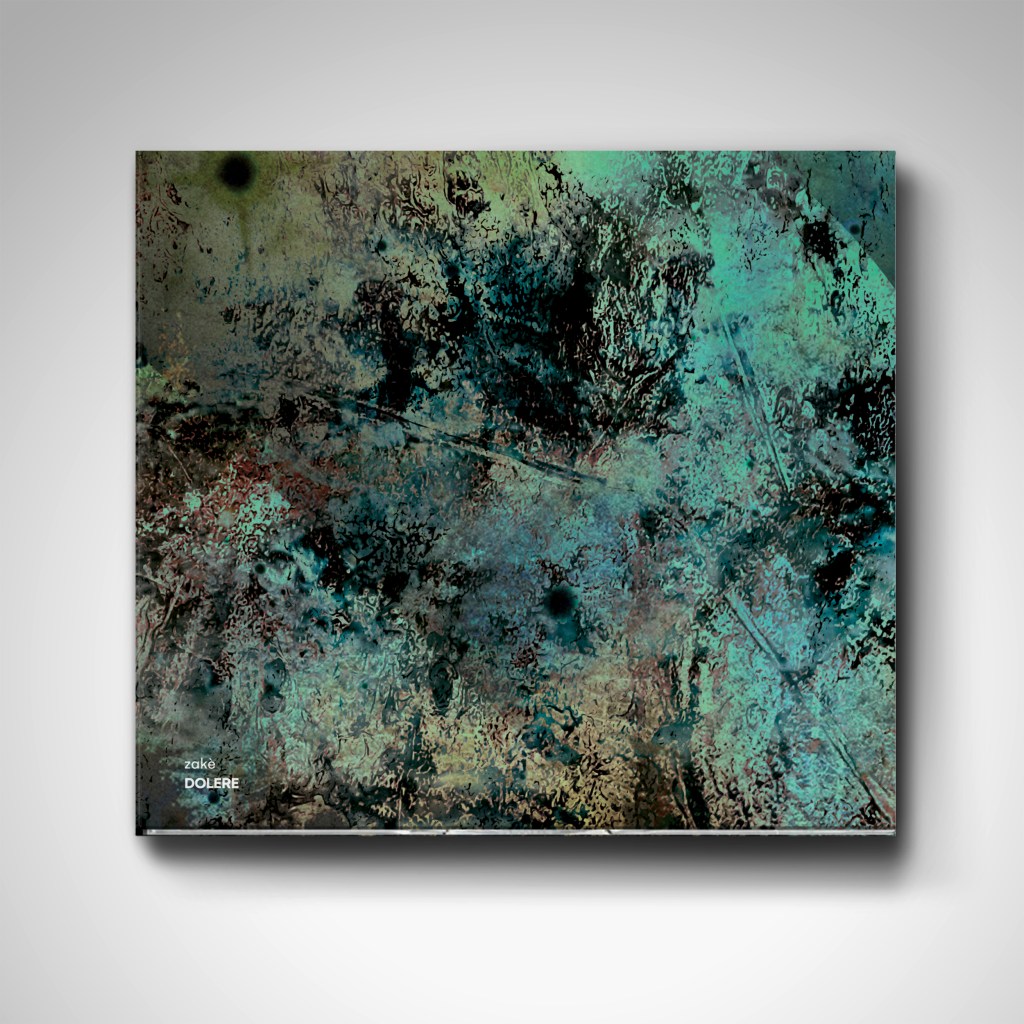
JS: How important is a unity of image (cover) and sound for you? The music is often created first, and then a cover is added later (under the impression of audio), which is presented to the listener as a combination. Some of my album covers were originally created by me on exploration tours in the form of a photo, and were then digitally translated, adapted, etc. by Markus Guentner afterwards. The interesting thing is that album covers then burn themselves into the brain and merge with the audio material. However, such initial images are often an expression of visual impressions that I had in mind at the time…
z: Imagery and sound are very important to me. They can be equally creative and significant to one another. For me personally, I’d say 60% begins with an image in mind whether it is accessible or an idea in mind. Luckily, I have incredible access to not only my photography/design, but many friends that support me with their visual works, such as Cynthia Bernard and Tom Meluch who have been incredible resources for album design and imagery. In more rare instances, the artwork is created after the album is done and furnished by someone other than me, Cynthia or Tom. Markus Guentner, for example, did all the artwork for Dolere!
JS: You have now released 2 albums under the name “Orchestral Tape Studies” (Pt. 1 and Pt. 2). It is interesting to note that, unlike many of your other projects, only pieces that are significantly shorter than those on your other projects have found their way onto the albums. As this is certainly not a coincidence, I would be interested to know what your thoughts were. Will there be a third part?
z: OTS I & II have a far purer loop-based technique that focuses more on the loop itself, rather than layers upon layers of other sounds intertwined. I recognize that being much more stripped down, repetitive loops such as these can only carry on for so long. The arrangements on these flow in a more traditional sense of each track represents a true piece of an album as a whole, best complemented as a full playthrough, whereas my longer pieces share a common theme, but are much more focused on the piece individually.
 Joachim Spieth