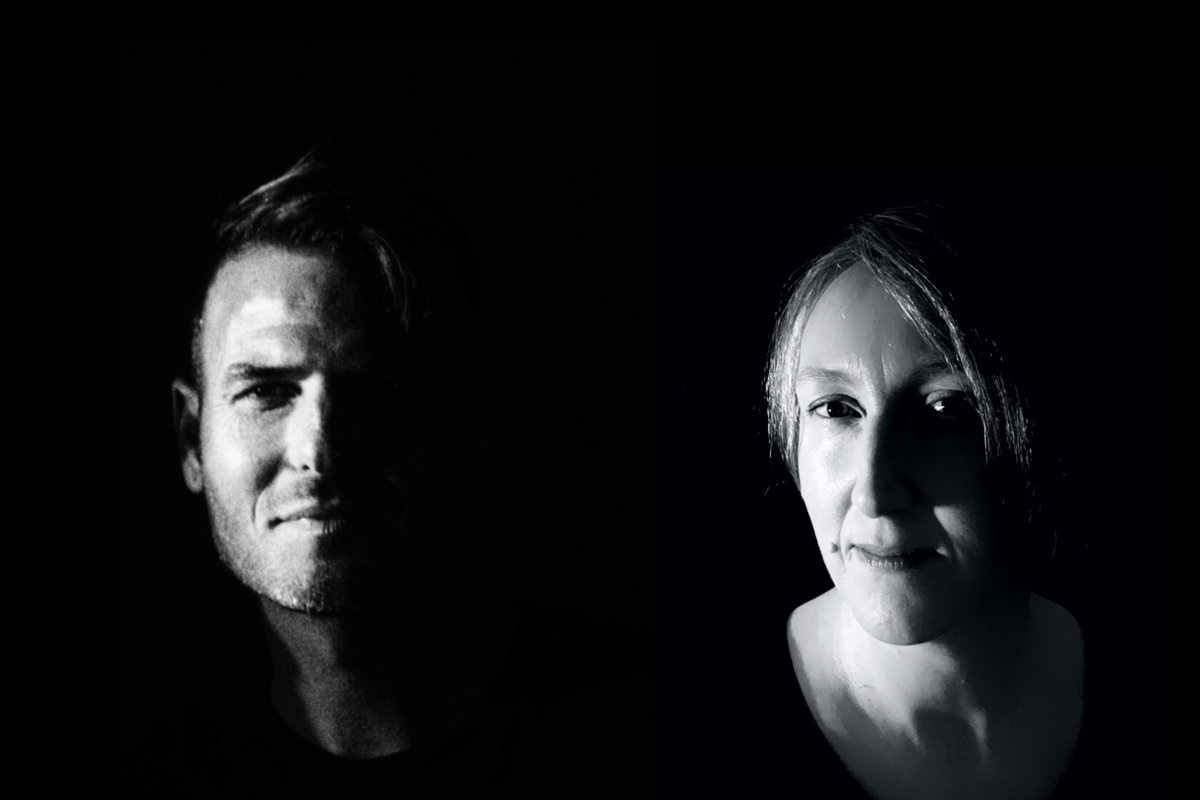
The Spanish-Australian project Galán / Vogt has existed for several years. As there have already been a few musical points of contact between us in recent years, we want to get to the bottom of things in a little more detail today…
JS: How did you first come together musically, where did you decide to do things together and how has the project developed since 2021?
GV: Gregory Euclide’s Thesis Recurring project was where we first noticed each other’s work, made contact, and decided it could be nice to work together on something. From there we worked on our first track together called “Try to Be More Realistic” (Ambientologist, 2020), which included reworking a piece of music by Benoît Pioulard for a compilation. This piece worked well and despite there being a language barrier between us, it became an advantage when we realised that we both rely heavily on intuition and instinct when making our music. This intuitive approach has ended up being an essential part of how we work together as we listen closely first and then respond musically, without giving too much instruction or detail in those initial stages when the song or idea is still forming.
After that first piece for the compilation was finished, we continued to work on a few songs together through 2021 with a shared hope to make an EP, or at best, an album. We’d pass files back and forth, listen, add parts, and pass them back again. Most often it would work in this way and this allowed us to develop our own style.
Eventually, we had enough material for our debut album “The Sweet Wait” (Editions Furioso, 2022). Soon after releasing this, we undertook the huge task of getting the album remixed by artists whose work we loved and admired. Looking back, we didn’t quite expect it to take as much energy, time, and resources as it did. But we are very proud of how it sounded in the end, and the remix album was released with the title “All The Time In The World” (Editions Furioso, 2023). We have been slowly getting around to the second album and letting ideas form for the concepts for that while we both work on our solo projects, collaborations and our respective working lives too. But we did a few things together this year that included a sound installation project for Spanish visual artist Juan Lesta, and of course, a remix of the track “Valenz” for the Guentner/Spieth collaboration released this year on AFFIN.
JS: How would you explain to a musician who has only produced alone what it feels like to make music together? What synergies arise here, and to what extent is there a learning curve because you can come across things together that you only perceive on your own?
GV: Everyone’s experience of collaborating is going to be different depending on who is doing it, and, what energy they are bringing to it. But it’s very much an exercise in trust and surrender – trusting both yourself and your collaborator/s. When you first meet someone new and have a conversation, there can be tentativeness as you are trying different things and often looking for a connection, similarities and also complimentary energies. Then at one moment, you find the places to connect and get enough movement to create in that excited, inspired way. Similar to being so deep in conversation that you aren’t self-conscious anymore. It works a bit like this. There’s a sense of playfulness about collaboration where you are engaged in this back-and-forth with the other person.
In regards to synergies, we found some nice movement between spaciousness, sparseness, atmosphere, emotional depth, warmth, and receptiveness too. The learning curve isn’t realised until much later after you’ve written and recorded the song. That’s when you can get perspective on it all. But in that moment of writing you are learning through doing it. The music evolves as you continue a collaboration because you both are changing over time as you learn how best to work with others. Sometimes these collaborations have a natural end, and sometimes they continue. Our feeling is that we have more to explore and express here. Some synergies we are yet to discover, but we are patient about it all.

JS: Your 2021 debut album “The Sweet Wait” was remixed and released as “All The Time In The World”. After having other artists (including Akira Rabelais, Helene Vogelsinger, Ada, Markus Guentner, Madeleine Cocolas, Alpha, James S. Taylor, and The Space Between Numbers) remix your work as a duo, what was it like to do your first remix as a duo, and to be remixing another duo’s work? What was your workflow, and how did you divide the labor?
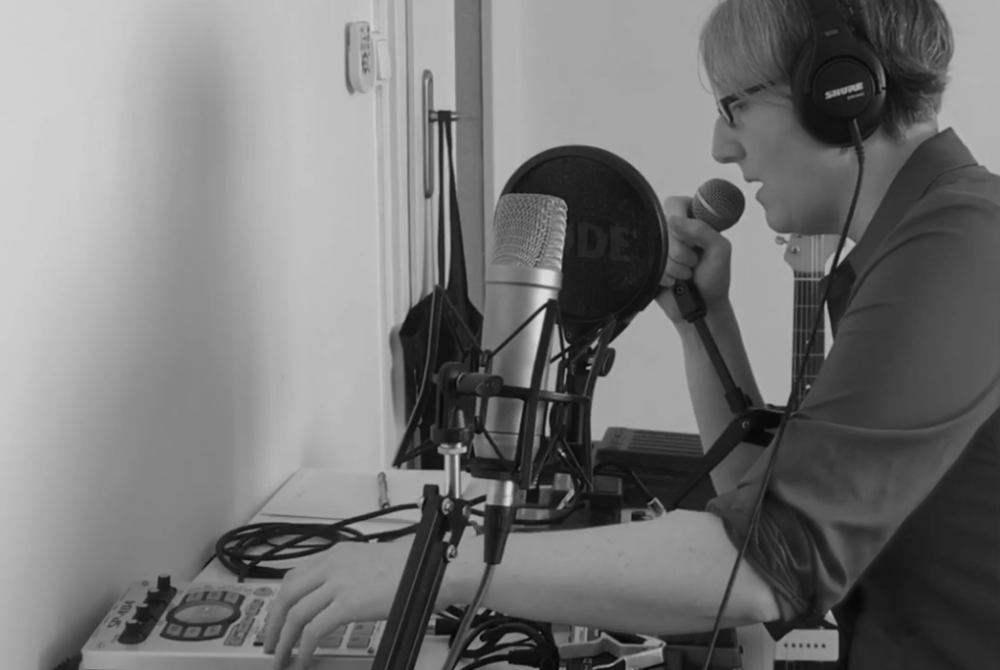
GV: To remix this track by a duo, as a duo, felt felt like there were four people involved as we worked on it. There were many decisions to make about what to include from the original stems that we were given. It was a bit challenging at first to know where to start because it was such a huge track. So we added extra parts to begin with. Pepo had messed about with a few of the stems and processed their sounds to experiment with some things. He also added some guitars as he played along with it and added some warmth and sweeps of emotion. Karen added vocals and manipulated some of the stems too, as well as carving up the drums and adding delay while also keeping that awesome field recording of lightning in the track.
It felt like it needed to go darker and stormier to bring the sound a bit closer to the earth and take that aerated, gaseous, and wind-like qualities of Markus and the steady, and heavily-textured sounds of Joachim and add some warmth and shadows. It was a matter of integrating all the new parts we had made first and then shaping them and the labour was divided in a very unstructured way with Pepo beginning work on it and Karen finishing it.
JS: Are there any plans to record a second studio album and maybe play live in the future?
GV: Yes, we will be making a second album at one moment in the future. That is the plan, but the timing is the thing that we can’t be sure of. I think most people realise now that many musicians are making music in between their day jobs. I think people can appreciate this and have an understanding that it will happen when we can make it happen. It will not be forced, but it will be at exactly the right time.
As we were writing the first album, we wrote two tracks that felt like they were very constructed. So this is a method that we might likely explore more in the second album. Still very intuitive, but with more of a structure.
Also, we had quite a few guests on that first album (Akira Rabelais, Jolanda Moletta, Simon McCorry, and Achim Faeber) so I think we will invite some for the second album too.
However, playing live is another thing entirely. This is a studio project for now. So unless a wealthy benefactor comes along, or we have a chance to play a series of shows, then it is most likely not going to happen. It would be lovely, of course, but it’s important to be practical.
JS: For your remix of Valenz for the Guentner / Spieth project, to what extent did a field element of a recorded thunder inspire you? It obviously plays a prominent role in your work…
GV: Field recordings are fascinating to work with as they can often bring the elements from the outside world into your music that add these extra, evocative dimensions to it. The sound of thunder that Markus had recorded and put into the original Valenz track was a real feature that we wanted to keep at the forefront. It’s something that we have both used in our music as solo artists in the past and had included a few things on our debut album also. There is something quite dramatic about thunder on that track and this was exciting to work with. We didn’t change that field recording of thunder much at all but instead changed many things around it for our rework of Valenz.
JS: Does it seem important for you to find a visual reference to the music in the music production process?
GV: Visuals can play a big role when you are thinking about the scene and about how the music feels. The main sense in the rework of Valenz was to make it a bit darker and more dramatic. You also have the artwork and how this fits and works with the music – because it can give it another perspective entirely. It can be like a lens through which to see the music and also frame it somehow.
Valenz always had this strong visual thread with the thunder running through it that made it feel like you were inside a storm. So for the remix, it felt like we just had to figure out where we would be as we heard this storm, and place ourselves in that scene.

 Joachim Spieth