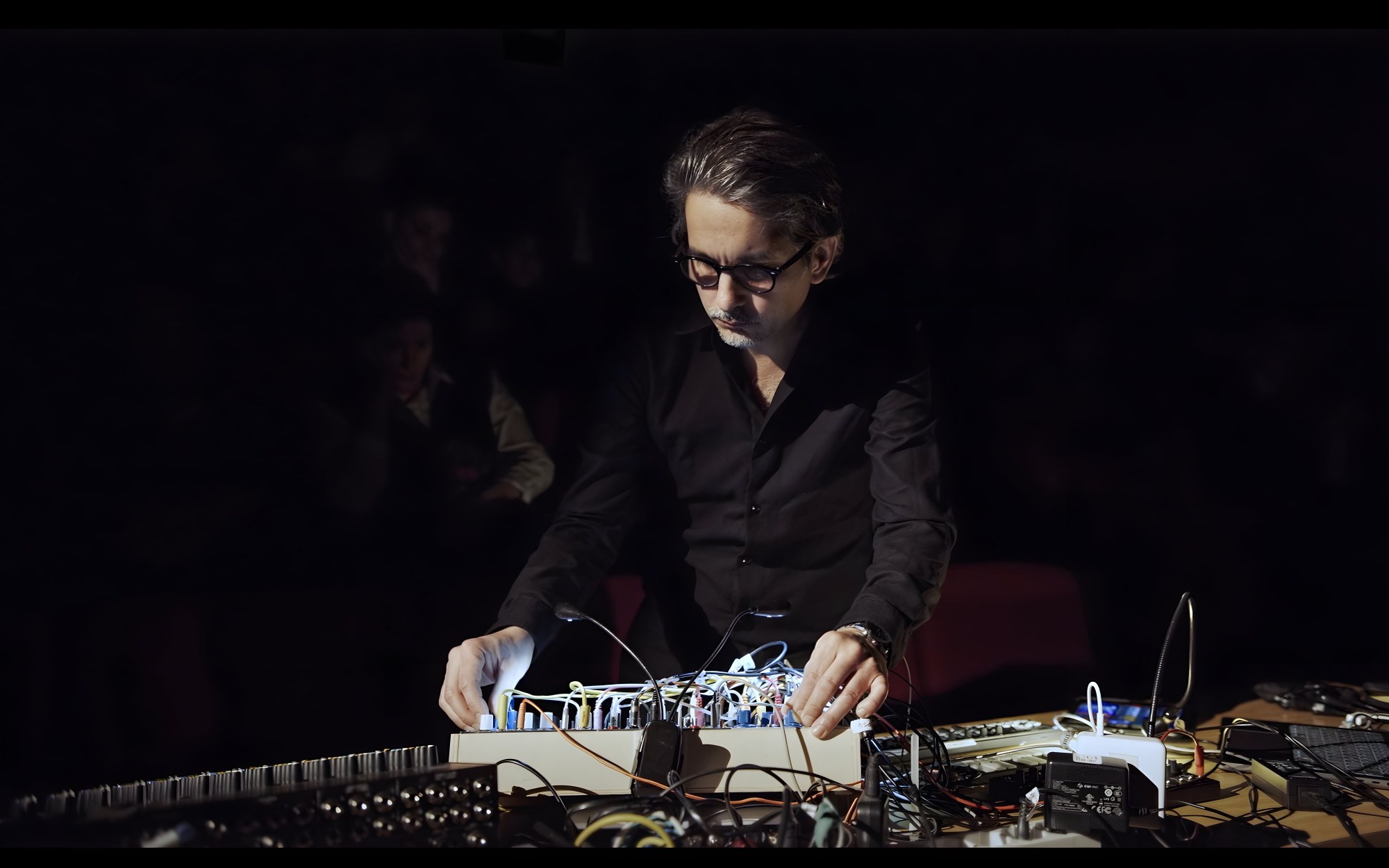
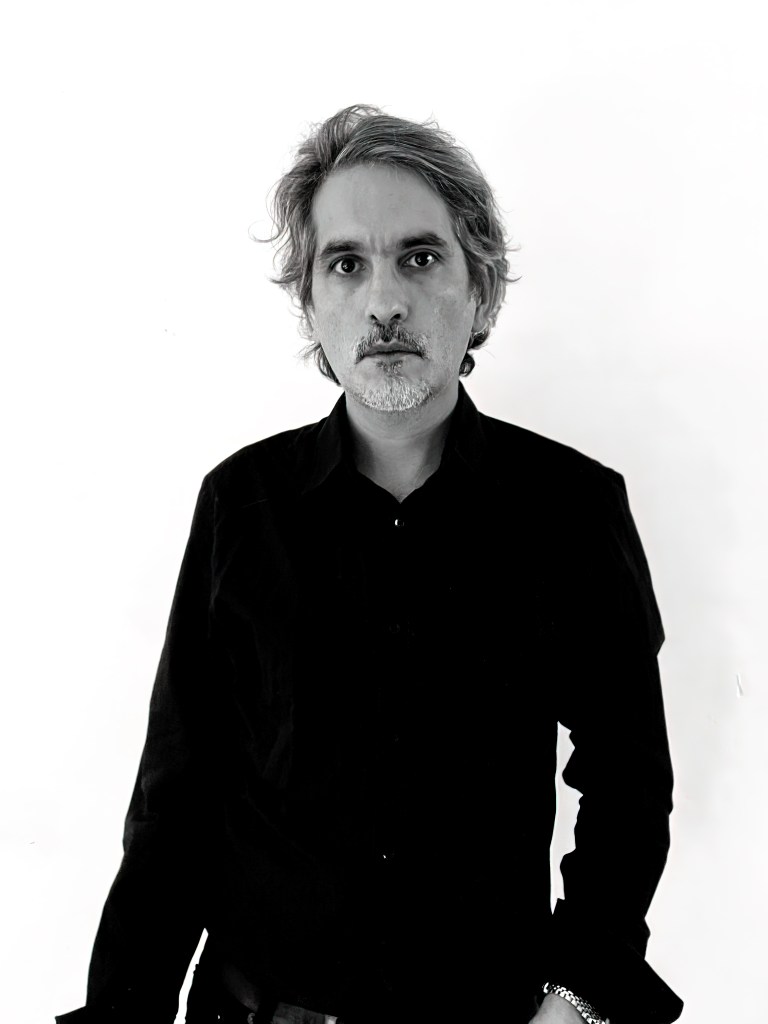
A few years ago, a good friend pointed out the music of Abul Mogard to me. A circumstance that left me with joy and amazement, because something had passed me by that I didn’t want to miss afterwards. I searched for more information about the project and it took some time before I realised who was actually behind the name. That was some time ago now, and I’m pleased to be able to publicise a conversation with him today…
JS: If I have observed your work correctly over the last two years, I would say that your life has certainly accelerated. What are the main changes?
AM: I think there have been various kinds of changes I’ve experienced in the past few years. First of all, in my personal life, being a father to a now 4 and a half-year-old daughter and having moved back to Italy after several years in London, just after she was born. These changes, in one way or another, have also affected my work. I have become a lot more consistent in my routines and tend to work mostly during the day rather than in the evening, like I used to.
I have a nice studio setup in our house, which includes a lovely piano from 1891, a Bechstein, given to me as a present by a close friend. This piano was the main source of inspiration for my album “In Immobile Air”, and when I was working on that album it was the time in my life when I decided to reveal that it was me behind the project Abul Mogard.
I also embarked on various collaborations, such as the albums I made with CoH and, more recently, with Rafael Anton Irisarri—two artists whom I deeply respect and had been following for some time. The record with CoH sounds quite different from my previous albums, and I was very pleased that I was able to finally use certain recordings I made with the modular synthesizers at the EMS studio in Stockholm during a short residency I did in 2015. This also led to playing shows together, which is a very different way to perform for me. The album with Rafael has been an interesting experience as it all started from a show in Madrid where, after our respective solo sets, we performed an encore together which was recorded. We really enjoyed the experience, and the very warm response from the audience encouraged us to work on a second long-form piece which completes the LP. In general, I have done more collaborative work in the recent times, such as various remixes and the split release with KMRU.
On the latter I used his individual sounds from his multitrack as a backbone to compose a new piece. That was another unusual process for me, as his sounds on this LP are very different from my typical palette, as they are acoustic and very percussive. The idea was to compose a response to his original material.
On a different note, an event that was particularly important for me was playing at the Union Chapel in London in 2022. I performed a new composition made for church organ, electronics, and trombones. It was commissioned by Claire M Singer for the Organ Reframed festival she curates, and it was an incredible experience. I played the organ myself, which is a pipe organ from 1877 called “Henry” after its creator, and I performed together with exceptional players from the London Contemporary Orchestra.
JS: In terms of your compositions, is there a theme or thing that serves as your main source of inspiration?
AM: My sources of inspiration can be various. It really depends. It could simply be an idea that comes to my mind while I am doing something else, such as attending a show, listening to music or viewing art, or just being somewhere. Occasionally, I hear a piece of music on the radio, and there might be a certain element that inspires me. Inspiration could also come directly from an instrument such as the piano, or from getting to know a new machine or a sample. Generally, it’s just a little spark that captures my attention and makes me think of ideas for developing it.
JS: Which musical influences would you describe as formative for your project “Abul Mogard”?
AM: There are many influences, some from my youth when I was starting to discover music. Richard Wright, the keyboard player from Pink Floyd, is one of them. I used to listen to Pink Floyd a lot, and I love what he did in the group. In my opinion, he really enriched the sound with his subtlety and sensibility. When I listen to some of my work, I still often hear some influences of his playing. Brian Eno’s work has been very influential, and in particular, an album I listened to a lot was “Apollo: Atmospheres and Soundtracks”. Some other significant influences come from Klaus Schulze and Tangerine Dream with their hypnotic sequences, Aphex Twin’s “Selected Ambient Works Volume II”, and Coil (especially the album “Time Machines”). I was lucky enough to see Coil perform it at Royal Festival Hall in London in 2000, and that was a life-changing experience for me. Other artists I discovered later on and find their music particularly inspiring are Eliane Radigue, Bernard Parmegiani, Laurie Spiegel, Meredith Monk and Pauline Oliveros. And I am sure there are other ones that I can’t recall right now.
JS: Is it possible for you to give a short insight into your studio work? Are there routines and/or rules according to which pieces of music are created by you? Is there an instrument/software or a component that is almost always used?
AM: There are no specific rules, and on each album, I used different setups. Initially, I mostly employed musical ideas that hadn’t been used in my previous projects, and I began processing these pieces with various studio tools, such as filters, preamplifiers, and effects.
I had recently built some of this equipment and wondered what they could do to these tracks I had. In fact, I believe that the process is often influenced by the equipment I have at a specific time. Other times I might start from a plugin, or a new combination of modules in my synth, or a new instrument, such as the piano when I worked on “In Immobile Air”. Some pieces of music start from a melody or a chord structure which I then develop using various machines or oscillators to play these parts. It’s a dialogue with the machines, and I am always trying to be open to unexpected sounds that I might get. I try to be guided by the sounds themselves and see where they take me musically. In terms of tools, I generally use a lot of effects, especially filters, delays, and reverbs, either hardware or software.
JS: How important is visualization to you within your live sets?
AM: Due to various logistical reasons, I don’t always incorporate live visuals at the moment, but I am always happy when it’s possible, as it makes it into a very different experience for the audience. Marja de Sanctis has been doing visuals for all my shows since the very first one at Berlin Atonal in 2017. I really like how she illustrates my music. Every time, she introduces an unexpected concept or idea, and this element of surprise is something I value greatly in any collaboration.
JS: The “Abul Mogard” project enters its 11th year in 2023. Is there a constant that has accompanied the first decade?
AM: One constant has certainly been working with Marja, as she has created all my solo album covers, videos, and live visuals. In fact, her support and ideas have been instrumental for the development of the project.
 Joachim Spieth